

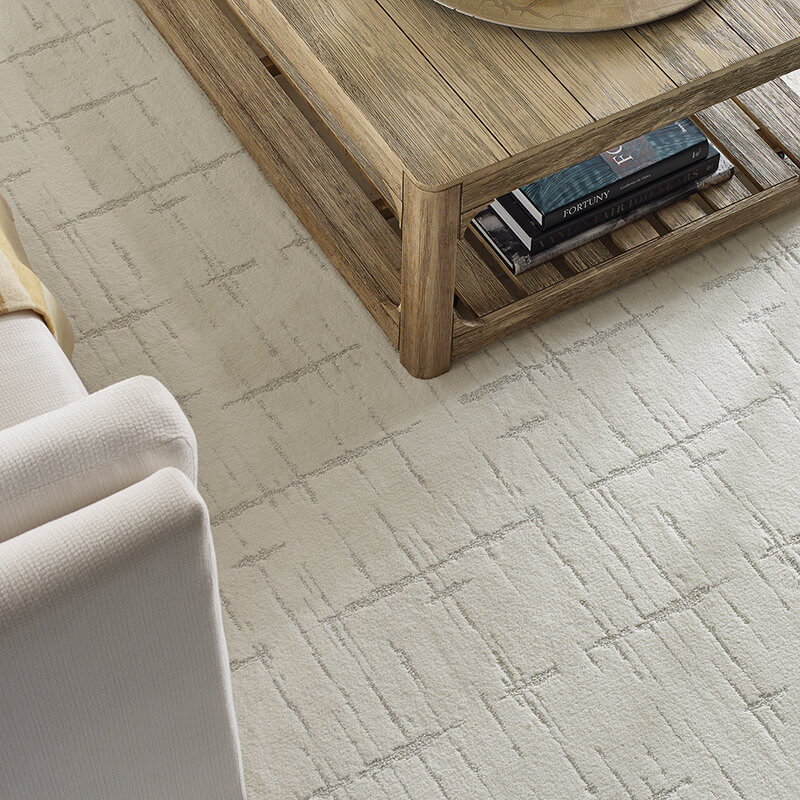
Patterned carpet has a way of pulling a room together that solid colors simply cannot match. The right repeat can soften a long hallway, anchor a formal living room, or add quiet movement to a staircase that once felt flat. The catch is that all of that beauty depends on careful planning long before installation day.
We at Plaza Carpets have walked homeowners across Lexington, Paris, Nicholasville, Georgetown, and Winchester through this process for years, and the same truths come up every time. A patterned carpet only looks effortless when the layout, the seams, and the repeats have been mapped with intention. Our flooring experts treat that planning stage as the most important part of the project, because once the cuts are made, there is no going back.
Why pattern repeats decide the whole layout
Every patterned carpet has a vertical and horizontal repeat, the distance between identical points in the design. That number changes how much carpet you actually need, where seams should fall, and how rolls must be aligned. Two pieces with even a slight mismatch will draw the eye straight to the seam, no matter how skilled the installer. This is why we measure a patterned room differently than a plain one, often ordering ten to fifteen percent more material to account for repeat alignment.
Reading the repeat before you order
Before any carpet leaves the warehouse, the pattern data sheet should be reviewed alongside the room dimensions. Large repeats, anything over eighteen inches, behave very differently from tight geometric patterns. A bold floral might require an entirely separate cut just to keep one motif centered under a window, while a small diamond grid forgives small shifts. We always confirm the repeat in writing so the room and the roll are speaking the same language.
Mapping seams away from the eye
Seams are unavoidable in most rooms, but their location is a choice. The goal is to push them toward walls, away from natural sightlines, and out of the path of direct sunlight. In a living room, that often means running the carpet so the seam lands behind the sofa rather than across the open floor. A good seam plan also considers traffic flow, since seams under heavy footsteps tend to show wear sooner.
Techniques that keep seams nearly invisible
Even a perfectly planned room still depends on the craft of the installer. Pattern matching at the seam is part science, part patience, and our installation crews build extra time into every patterned project for exactly this reason.
Pattern matching across the seam
The two edges of carpet meeting at a seam must share the exact same point in the repeat. Installers do this by carefully shifting one piece against the other, sometimes by fractions of an inch, until the design lines up. Our team approaches every residential and commercial flooring installation project with this kind of attention, because a rushed seam on a patterned carpet will haunt the room for years.
Seam sealing and proper seaming tape
Once the pattern is matched, the seam itself needs to disappear. High-quality seam sealer locks the cut edges so fibers do not fray, and heat-activated seaming tape pulls the two sides into one continuous piece. On loop-pile patterns especially, sealing prevents the kind of unraveling that turns a small flaw into a visible line.
Choosing the right pattern for the room
Not every pattern suits every space. Tighter repeats hide seams more forgivingly, which makes them a smart choice for rooms with awkward angles or multiple doorways. Bolder patterns reward open spaces where the design has room to breathe. Our showroom guides homeowners through these decisions, and our carpet selection covers everything from quiet textured loops to dramatic geometric prints.
Get expert help with your patterned carpet project
Patterned carpet is one of the most rewarding flooring choices a home can have, and it deserves a team that takes the planning as seriously as you do. Our shop-at-home service brings samples and measuring expertise straight to your door, so you can see how each repeat will live in your space. Schedule a shop-at-home visit and let us help you bring the design together with confidence.


